


ARTISTS Salvador Dalí
Dalí and the Mediterranean
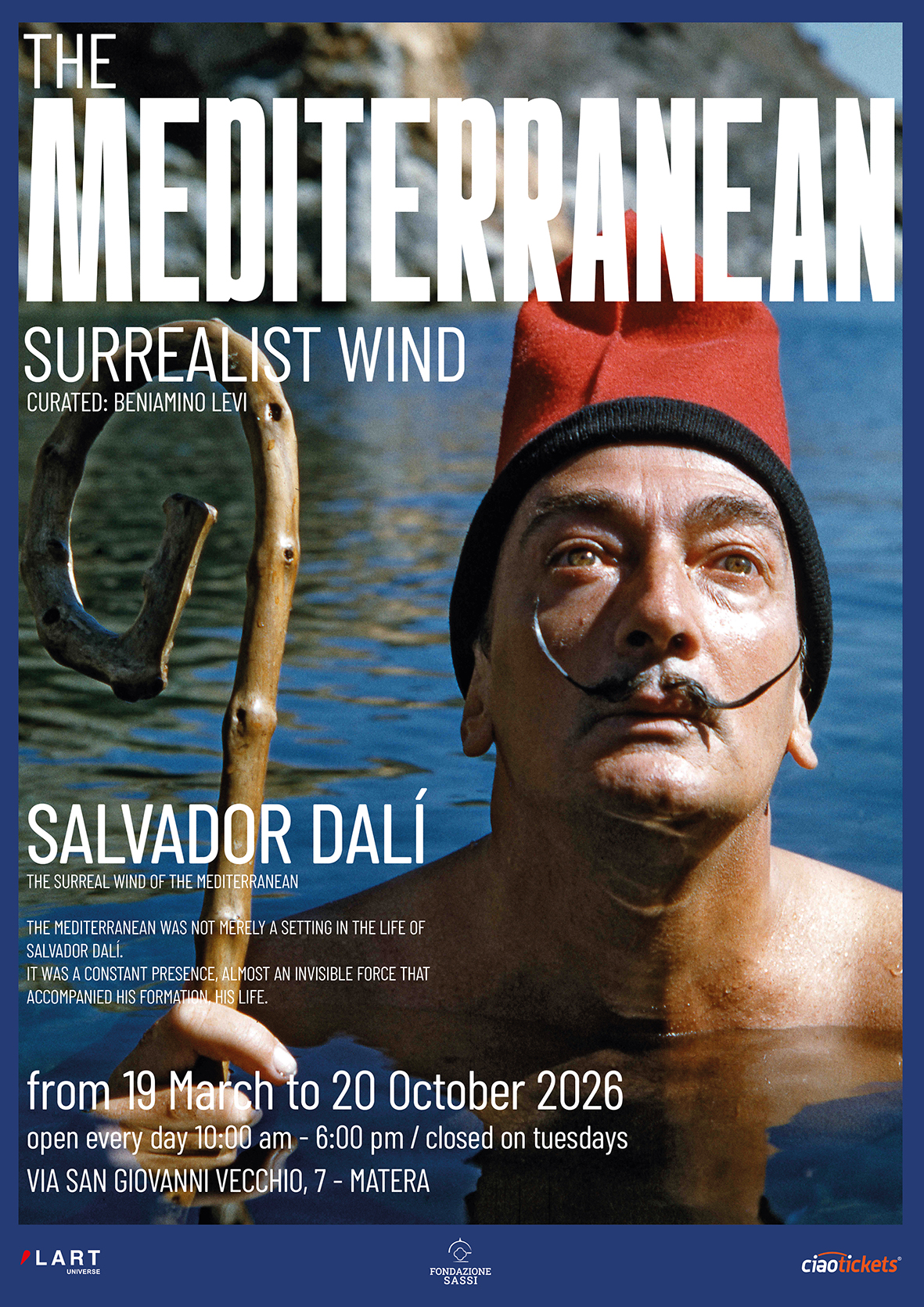
THE SURREAL WIND OF THE MEDITERRANEAN
by Salvador Dalí – Curated by Beniamino Levi
The Mediterranean was not merely a setting in the life of Salvador Dalí, but a constant presence, an invisible force that accompanied his formation and the creation of some of the most iconic images of 20th-century art.
The wind that sweeps across the Catalan coast, the clear light of the sea, and the rocks shaped by air become fundamental elements of his artistic imagination.
Milan, March 18, 2026
It is precisely around this myth of the Mediterranean that the new exhibition project hosted in Matera takes shape.
Following a previous experience in the city, Lart Universe, together with the Fondazione Sassi, continues its cultural dialogue with an exhibition that explores the relationship between Dalí and the Mediterranean landscape.
The exhibition path is rooted in the key places of the artist’s life: Cadaqués and, above all, Port Lligat.
It is here, overlooking that still and dazzling Mediterranean, that the most intimate and visionary universe of Salvador Dalí takes form. Port Lligat is not merely a geographical place, but a true origin: the point where light, landscape, and silence gave birth to his imagination.
It is among these rocks, under this clear sky and before this timeless sea, that Dalí, for the first time, conceived and created in 1931 his famous melting clocks—icons of a time that dissolves, just like the Mediterranean horizon that generated them.
Here, the seascape—the still light of the bay, the wind-polished rocks, and the open horizon—enters directly into his art, becoming an integral part of his poetics.
The Mediterranean thus becomes a true symbolic matrix: water, wind, and light transform into metaphors of movement, metamorphosis, and transformation.
In dialogue with the city of Matera, an unexpected affinity emerges.
If along the Catalan coasts the Mediterranean manifests as open sea and wind, Matera represents the terrestrial face of this universe: a city that, over the centuries, has transformed water carried by air into architectural ingenuity, through the complex system of rainwater collection in the Sassi and underground cisterns such as the Palombaro Lungo.
Among the works featured in the exhibition are iconic sculptures such as Space Venus, Dalí’s “spatial Venus,” which reinterprets the Venus de Milo within the artist’s surrealist universe. A fundamental element is grafted onto this presence: the appearance of a melting clock, a clear reference to the visions conceived by Dalí in Port Lligat, on the shores of the Mediterranean, where time dissolves into light and landscape.
The exhibition also includes references to Platonic polyhedra, used by Dalí to evoke the elemental principles of nature, including the icosahedron associated with water and the octahedron associated with air, recalling the sea and wind of the Catalan Mediterranean coast.
Also featured is The Laurels of Happiness (1974), part of the After 50 cycle.
The work symbolically narrates the encounter between Dalí and Gala in the Mediterranean bay of Cadaqués, transforming the Mediterranean landscape into a metaphor of artistic and existential rebirth.
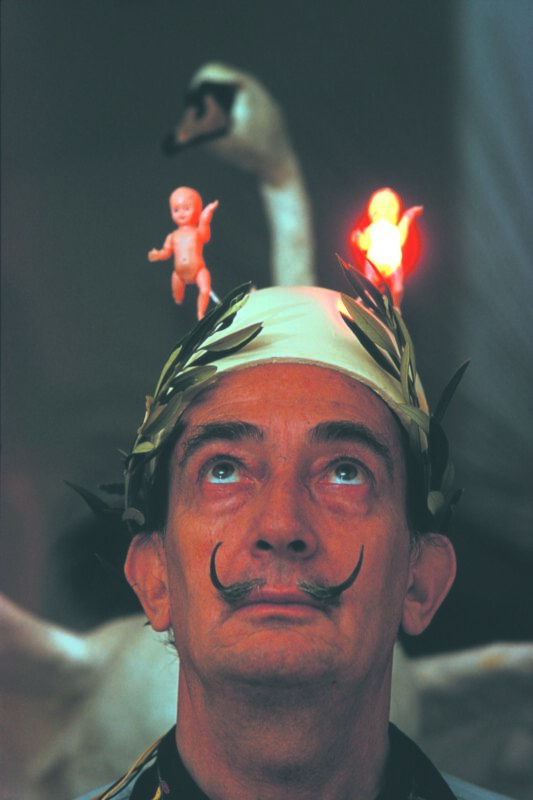
Alongside the works, photographs by Robert Descharnes will be exhibited, deeply connected to the landscapes of Cadaqués and Port Lligat.
The exhibition thus constructs a narrative in which wind and water become the elements of a poetic dialogue between Dalí and Matera—between the Mediterranean as an open sea and a city that has transformed water into memory, architecture, and culture.

COLLECTIONS
One of the largest groupings of Salvador Dalí’s artworks.

COLLABORATIONS
Events and collaborations worldwide to promote the art of Salvador Dalí curated by Dalí Universe.
